I won’t go into all the details of my journey with non-Hodgkins lymphoma, but my story began in November 1999, when I was diagnosed as a grade two (follicular mixed) NHL stage, III. I did well until June 2004 when I developed bilateral pleural effusions. I had to have multiple thoracenteses and a tube was placed in my chest. After receiving the second course of Rituxan CHOP (also referred to as R-chop), the effusions abated. A month later I presented with nodules on my lower back area. Biopsies showed transformation to an intermediate-grade, diffused, large B-cell lymphoma and a follicular grade-3 lymphoma. The disease progressed to the breast, the abdominal wall, and eventually, invaded 10 percent of the bone marrow.
At that time, I was selected to receive an allogeneic BMT from an unrelated donor because no one in my family was a match. Fortunately, a donor was found. The story continues.
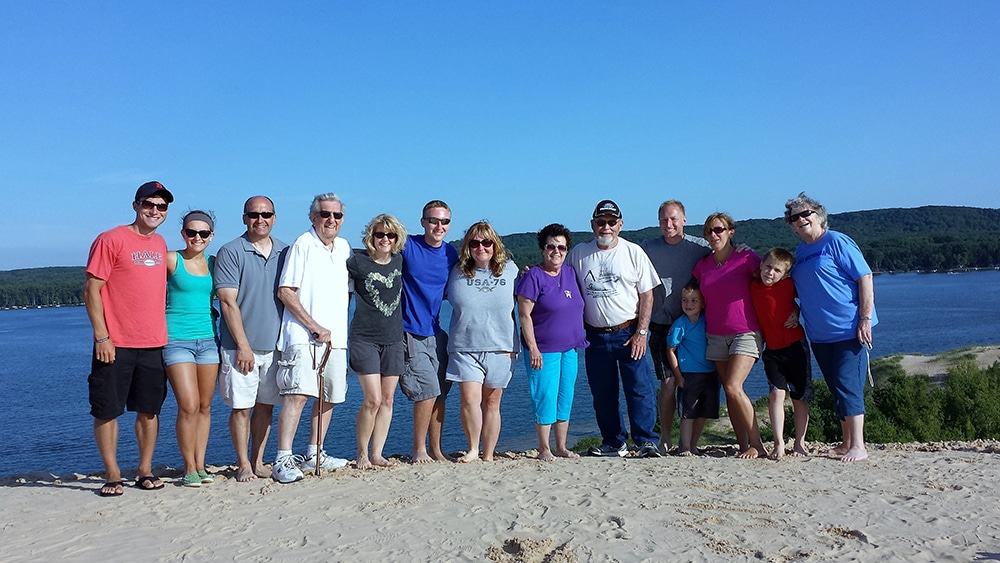
I had all the usual BMT problems and fought the fight with GVHD and viruses; and, here I am today. Ten and a half years later, I am enjoying life, working part time at age 73, and I’m able to do all the things I want to do, especially enjoying my family and friends.
One day, as I was lying in the hospital bed, I thought, “Why me, Lord; why am I so fortunate to be at this point in my life when I see others younger than I am, not making it this far?” There must be a reason.
Then I thought about all those special people who helped to get me where I am. Besides family and friends, there was my donor – bless her – and my “buddy” whom I had never met but who was there to support me and help me along the way. The answer came to me right away. I want to be like all of them.
I want to help those who are going through this challenge and to try easing their minds. That would be one way I could help their bodies heal; not only physically, but mentally as well. From experience, I know how important this healing is. After a few years of my own healing, I called the nbmtLINK and talked to them, did my homework, and read as much as I could.
Then came the day and that first phone call to help someone. This person welcomed me and I could sense the relief in her voice. I could say to myself, and to her, “I know how you feel.” I call this opportunity “paying it forward.” There is nothing like that feeling!