By BRIAN SMITH
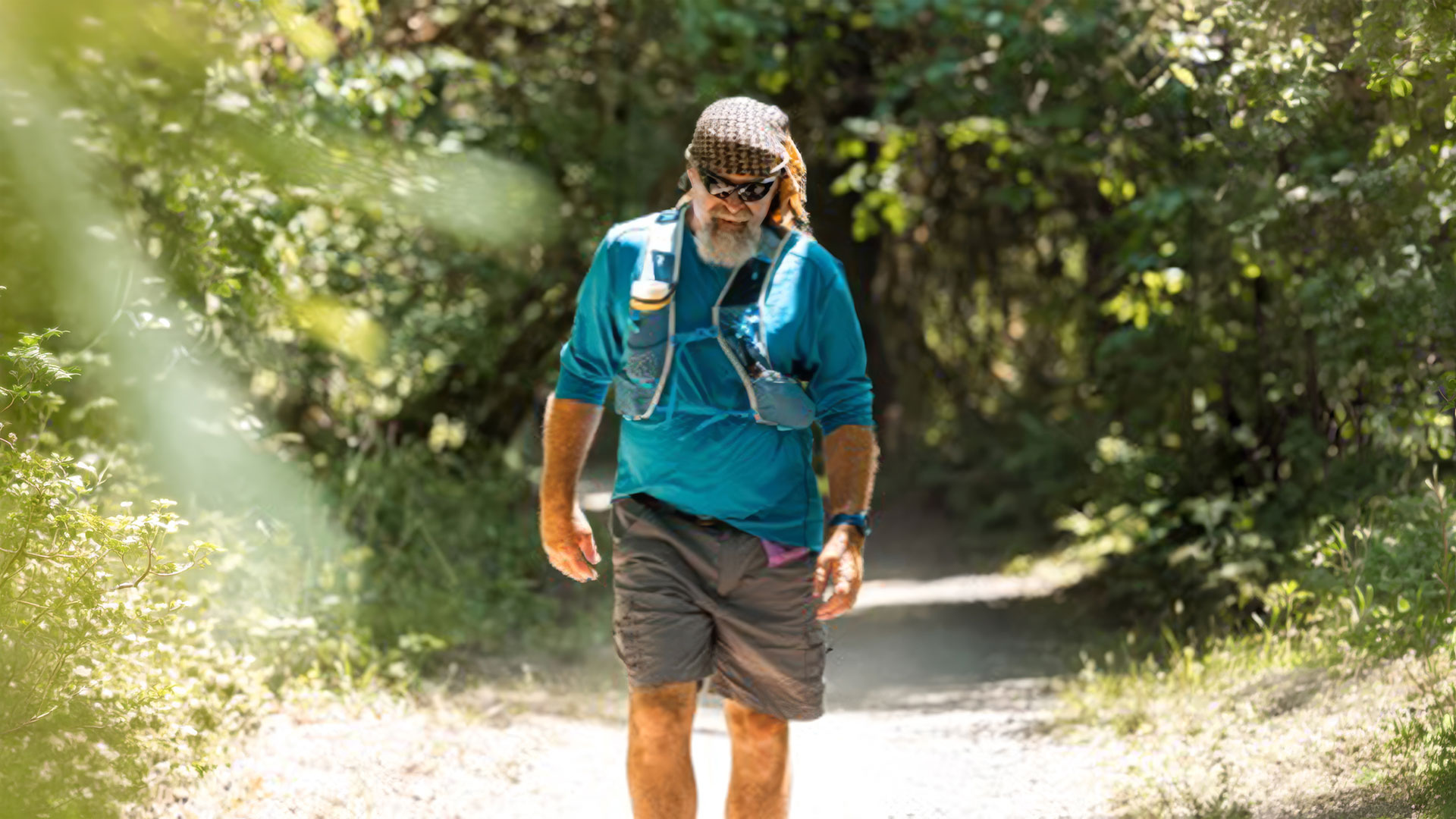
I spent 34 years as a firefighter, in three different western states, retiring on August 1, 2020, as a Battalion Chief.
Firefighters are stubborn in many ways. We don’t like to lose battles, and that is why we fight to the bitter end to extinguish fires and attempt every medical procedure we are allowed to perform to bring someone back from the brink of death.
Another way we are stubborn is we rarely ask for outside help, except from other firefighters. When a firefighter is forced to ask for help, we tend to get a bit embarrassed because often, we need that assistance due to making a mistake or miscalculation. To say it plainly, rescuers don’t like to be rescued. But this is where I found myself two and a half years ago.
I was 63 years old, enjoying my best retired life, spending time with my family, traveling, and of all odd things, completing ultra-marathons. I had always been healthy, never spent a day in the hospital, and had no lingering injuries from my fire service career. Then life hit me full force.
In late June of 2023, I noticed a swollen lymph node in my neck. It wasn’t painful, so I dismissed it and went on to complete a 53-mile race on July 1. I then noticed a second swollen node, and I had an increased level of fatigue, but I was training for a 200 mile race at the end of August in Oregon, so I dismissed it as simply overtraining. I also noticed a sense of brain fog which I excused as allergies, along with a weird symptom that I’ll describe as a sense of ambivalence about everything, from resting, to eating, to accomplishing daily tasks. In early August, I took a trip to see Custer Battlefield, and experienced three straight nights of drenching night sweats.
This symptom forced me to seek medical care, which I did on August 16, where a physician assistant (PA) ordered a blood test and some imaging. Two days later, I was told by the PA to go to an emergency room (ER) immediately because my blood work was completely out of whack. It was the first time I heard the dreaded “L” word, leukemia.
I was admitted to the hospital, and the next day, I had the first of what would eventually become nine bone marrow biopsies. Firefighters are at increased risk for multiple cancers. I kept an eye on many potential cancer related issues, but leukemia was not even on my radar.
On Monday, August 21, I received “that” phone call, with the doctor informing me I had acute myeloid leukemia (AML). He directed me to immediately go to the ER at OHSU (in Portland, Oregon) for admission and treatment for AML. My white cells were at 60,000, I was severely anemic, and my platelets were extremely low. The doctor told me that without treatment I had two to three weeks to live
That is the origin story of my leukemic journey.
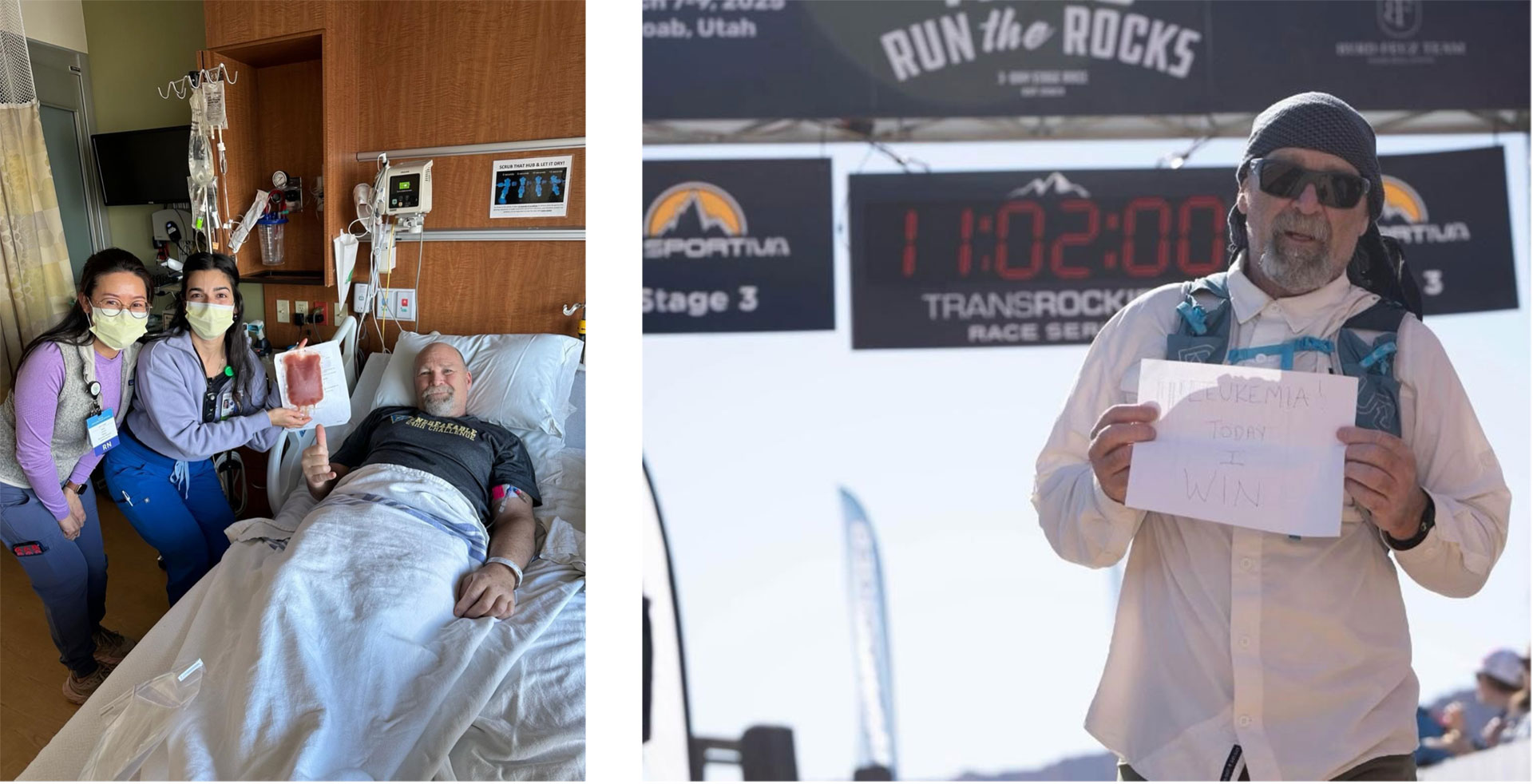
I was in the hospital initially for 29 days of induction therapy before my neutrophils returned. I did not go into remission. The road got rougher when two weeks after my discharge, I developed tumor lysis syndrome and spent a night in the ICU with my kidneys failing. I dodged that bullet, and my regular hematologist/oncologist was still moving towards a transplant. I was given a second round of chemo, azacitidine and venetoclax, and went into a solid remission. I was recommended to a transplant doctor at OHSU.
I reentered the hospital on March 8, 2024, went through a reduced intensity chemo regime, and received my new cells on March 12th. On Day+16, I was released and started my 100 days near the hospital to be watched for graft rejection or GVHD. I had no real issues during that recovery phase and was released to finish recovering at home on Day+91.
I am now two years post-transplant (Day+730 if you’re counting) and living life without restrictions. I have been given all of my childhood vaccinations again, and my blood work has been completely normal for the last year. My last bone marrow biopsy, one year ago, showed no residual disease, no sign of the prominent mutations I had, and a 100% engrafting. I have also recently been able to meet my unrelated donor, my true “brother from another mother.”
My words of wisdom come from an older patient of a stem cell transplant (SCT) who I watched on YouTube. He called his transplant experience, “arduous, but bearable.” That is exactly what this experience has been for me, and it has taught me a new sense of humility to allow others to rescue the rescuer in his time of need.